Twilight Dream Song
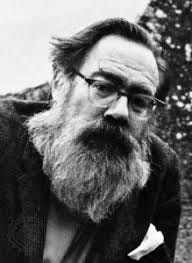
Remembering the poet John Berryman

It was shortly after the horror of Kent State that I had myself committed to a psychiatric clinic on a reckless ploy to beat the draft. The violent unhinging of the American Dream profoundly messed with my equilibrium, and I turned radical, dropped out of art school in Minneapolis. There I took to the streets with thousands of others and was arrested twice, once at gunpoint and once tear gassed and clobbered over the head during an anti-war protest march. Study seemed ludicrous in an apocalyptic world. In my long hair and anarchist’s leather coat, I was smoking way too much weed and staying up all night with fellow art school reprobates, talking revolution and drinking Thunderbird with the winos across the street in Washburn park. This descent into counterculture militancy was the only authentic response to the madness I could envision for myself. The clean-cut callow youth my parents had cheerfully waved goodbye to only ten months before was now unrecognizable, a lost kid in a nuthouse pretending to be nuts. In the very real darkness of the soul I experienced in that psychiatric ward, in nights dripping with inconsolable loneliness, I wondered if my pretense was actually necessary.
Upon arrival at the clinic, I was debriefed, handed a paper cup cocktail of Thorazine and other unnamed meds. Lights out came early. There was little in the way of diversion. We were given our meds and we zoned out. I was placed in a room with a patriotic middle-aged trucker named Charlie. We immediately regarded one another with mutual contempt. Fuck this, I thought, I might as well be sharing a prison cell with my worst enemy; the flag waving redneck trucker and the militant hippie locked up together in a room barely large enough for two small beds. There was just no escaping the war, even in there - its toxic seepage oozing into every nook and cranny of the national scene, poisoning everything in its way. Nothing less than a new paradigm was needed, but that had been taken care of on Nov. 22nd, 1963. Washington now, only six years later, resembled Hitler’s Berlin bunker with the Rat, tricky Dick scurrying about and his creeped out feral minions, the Beebe Rebozos all leaving their own trails of slime behind them.
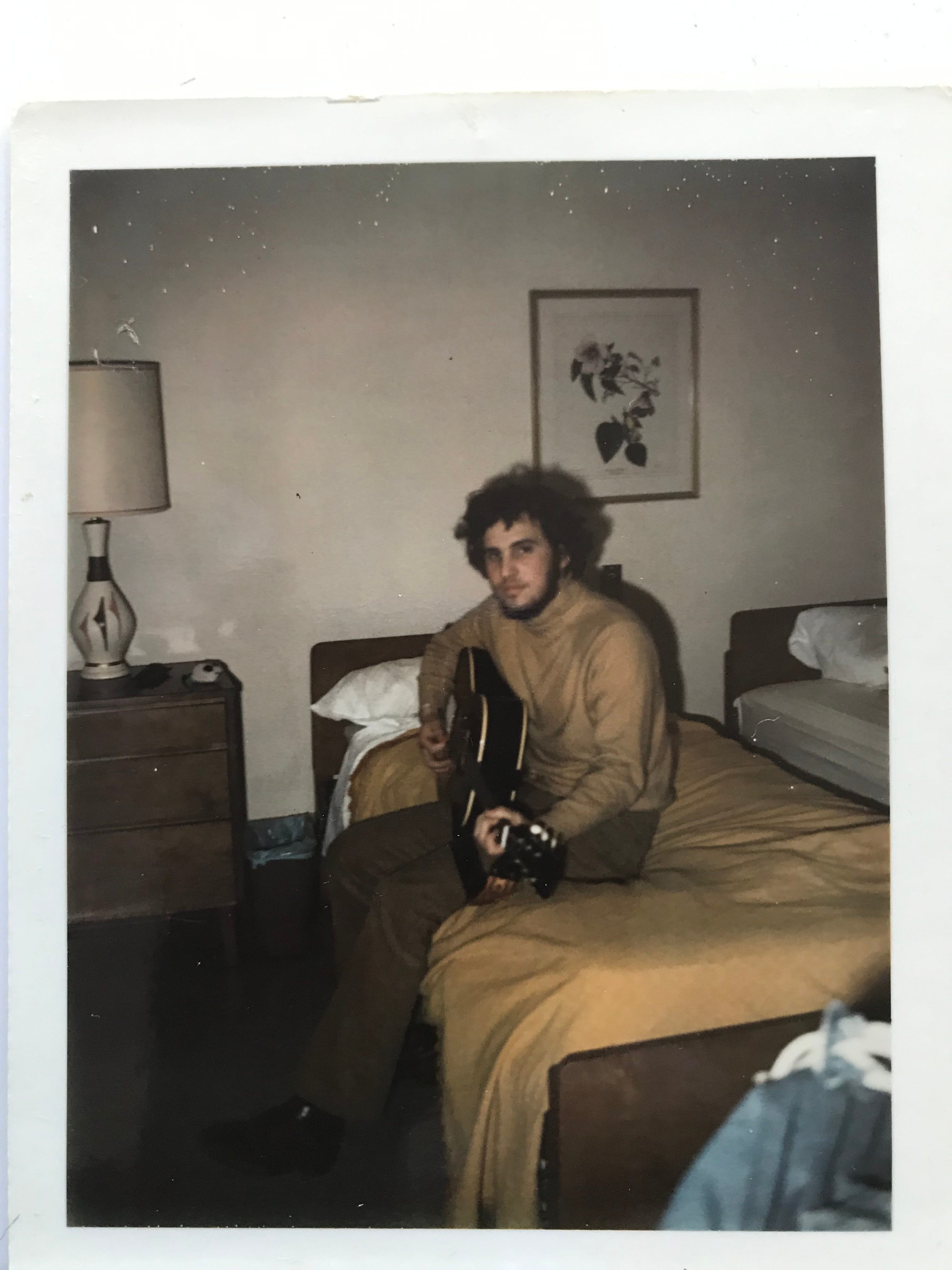
At night I’d sit on my bed facing away from Charlie and quietly play my guitar before falling asleep. Then the inevitable horror would come. Every night, without fail, Charlie would violently awaken, choking to death with some terrible affliction. Hanging from the headboard of his bed was a buzzer to summon help. The nurses would rush in and revive him. Apparently there was nothing medical science could do to alleviate his suffering. This gruesome life and death drama was unnerving. More than once I wished Charlie would just give me a break and die already as I never got a full night’s sleep with him thrashing about. Lying in bed wide awake, deprived of sleep and without solace, I could not have been more miserable.
The days passed in a Thorazine haze. I stumbled about among the broken and the doomed doing my time, questioning my own sanity. Outside the hospital my world was literally in flames. Kent State, I learned, had sent shock waves across the country. Some four million students were on strike shutting down over four hundred universities and schools. Two more students were killed and eleven more wounded by police during another demonstration. I felt that there was no place for me to light upon, to lay my head down in peace.
One day, though, into this bleak confinement, a miracle appeared in the form of a girl named Laura who was undergoing a series of brutal electroshock treatments. She and I were the only teenagers in the ward and were inevitably drawn to one another. Transfixed by her luminous aura and the extraordinary grace in which she endured the daily trauma of her shock treatments, I couldn’t help but fall in love with her. Suddenly there was light. We’d talk for hours from the profoundest depths of our hearts, sharing our innermost thoughts. We planned our escape together to someplace far from the madding crowd. I had friends living on a commune in British Columbia and a cousin in San Francisco who could put us up, help me find a job. She readily agreed to every fanciful scenario I proposed. Throwing her arms around me she’d whisper, “yes, yes” over and over in my ear, her tears wetting my cheek.
What more could we possibly have done than to create a fantasy for ourselves? Everything was broken, heartbreaking, doomed. Her bedside became a magic playhouse we crawled inside to be alone. Every minute was precious. She had a small white sheep made of wool that was her faithful companion, her comforter and protector. She slept with it beside her. Our love was platonic, there was no other choice, but one day, without warning, she kissed me. Then another day soon after, she kissed me again and told me that she now had two protectors, the little sheep and me. My heart leapt, but I could see in her eyes that her light was diminishing. I laid down beside her on the narrow bed. For just another moment longer we had a future.
But I was not alone in my love for Laura; another platonic suitor appeared one day. Much to my surprise, I entered her room to find the poet in my place at her bedside. I had seen him in the ward, of course, sitting alone, wrapped up in a trench coat like a shrouded corpse, the sorrowful eyes behind the thick-framed eyeglasses, the full-blown biblical beard, the suffering palpable. There was no approaching him in such pitiable condition. He was a tormented soul barely hanging on to life. His fellow patients all left him alone to his suffering. I had not yet read his work, nor did I know anything about his lifelong struggle with depression and alcoholism, or his father’s suicide in his childhood. He seemed ancient to me, but he was, at that time, only fifty -eight years old.
His first words to me upon meeting were “I’ve been waiting for you,” offering me a playful smile. He had obviously gotten through the DTs, the worst of it, and was on the mend. I turned to Laura. She, too, was smiling.
“Sorry to keep you waiting,” I replied. “What can I do for you?” I asked, playing along.
“Oh not much,” the poet replied. “I was just hoping to see you on your way, you know, have a little visit, send you off into the world with well medicated fanfare.”
“Sure,” I laughed. “Am I going somewhere interesting?”
“Yes, I do believe you are. From what I hear, on a long journey, my young friend.”
“Really? That’s great. When do I leave?”
“Oh, you already have, son,” he told me.
And so it was that John Berryman, this profoundly wounded magus, entered my life for a brief moment. He joined Laura and I in our make-believe playhouse, and there was much laughter, care, and love shared between us. Whatever demons consumed him in this, a final attempt to dry out, a tenderness was evident. He rarely spoke of himself or his work, although I remember him describing his plight as the blood of the poet. Laura was our entire world. It seemed inconceivably cruel that such suffering and beauty could coexist in one being. I am haunted to this day by her courage and laughter, the feel of her slender hand in mine, her head swathed in bandages. We three formed a loving bond that transcended our wretched reality. Reality had no place in our little world. One day the poet proclaimed that he was going to adopt her. Laura loved the idea. Perfect, I agreed, as I, too, yearned with all my heart to save her, to be her protector, her lover, her everything.
The days began to pile up. I took the meds, did what was asked of me and jumped out of my skin every night to Charlie’s panicked strangulation ordeal. But my fate was uncertain. After several weeks of confinement, with no exit date forthcoming, I began to wonder if my risky plan to fuck the draft had backfired on me, and in some cruel irony the medical staff had determined I actually did belong there. I felt that I was teetering on the edge of personal disaster, a soul in self-imposed purgatory. One day I had been an eighteen year-old art student smoking pot, hanging out with my counterculture friends, the next locked up in this bleak confinement futilely yearning for something I could not quite grasp.
The poet understood. He could see right through me. One day as we sat together awaiting Laura’s return to us, I told him about how I wanted to run off with her, escape the madness and start a new life somewhere far from the war, all worldly conflict, to some little peaceful town where I would get a simple job selling nails and drill bits in the local hardware store and come home to our simple home and make love all night to my beloved; but he wasn’t buying it. He shook his head at such naivety.
“No, that’s not your calling, that’s not where you’re headed. There is no such place, no such hardware store, no such front porch with the two rocking chairs and the pitcher of lemonade, not even such a conjugal bed as you imagine it. The town is full of hypocrites and bigots and the kindly avuncular guy who owns the hardware store is a rabid anti-Semite, and the woman in your bed, especially our beautiful Laura, wants more from life than waiting all day in her apron for you to come home from work. I know you want everything to be simple, good, for all conflict to be resolved and for everyone to hold hands and bake bread together in some utopian kibbutz/ commune of the heart, but that would never work for someone like you. Those impulses to make every single wrong right are childish. I don’t see you going there.”
He and I would sit quietly on opposite sides of Laura’s bed after her shock treatment sessions, holding her hands in ours, praying for her safe return to us while she lay there in a coma like state,. It was in these anxious moments that Berryman spoke to me of what he described as the journey within the journey, the journey he insisted I had already begun. We’d sit facing one another and he’d regard me with those sorrowful eyes. Then In language both familiar yet barely comprehensible he laid out the roadmap for my inner life. I will attempt here to capture the essence of his words.
“What you don’t yet understand, but you will someday, my friend, is that this ugly war, your being here in this phosphorescent tomb with all this suffering, the lostness, the tortuous sleepless nights with your truck driver nemesis, the acrid stench of burnt out human wiring in your nostrils, all these terrible things you are experiencing, are not your destination and they do not define you. They exist, ultimately, only to provide you with the means to come ever closer to your true nature. That is your destination!’ He exclaimed. “That is the home you are searching for.”
“You think you are here to get this document to dodge the draft,” he told me another day. “Sorry, but that’s not it. Well, I mean you may do that, but that’s just incidental. Look deeper. Do you think that our meeting, our sitting here holding this beautiful girl’s hands in ours is without meaning? Once you understand that there are various levels of understanding for everything that happens, your destination will appear before you. These realizations will probably be subtle. It won’t be some praise the lord revival tent show healing of the lame and the blind, but you’ll begin to say to yourself, ‘Ah ha. So that’s what’s really going on here.’ Then the real fun will begin,” and with that he grinned and placed his hand over mine.
“Hey! Look who’s waking up,” he’d exclaim, as Laura would begin to stir, open her eyes, and focus in on us.
“My dashing heroes,” she’d smile weakly. How our poor hearts overflowed.
Each visit with John brought another talk about the journey, the mystery inherent in our very consciousness, the family of concepts we call fate, serendipity, irony and paradox, those essential tools of the poets toolbox. No one had ever spoken to me of such marvelous things before. No one in my entire life had ever spoken as directly to my heart as he did then.
But each evening I would have to leave Laura’s bedside and return to my cell, to Charlie and the war, and each return there became more difficult to endure. I wanted only to lie beside Laura, to speak again with the poet, to feel alive. I didn’t know how many more terrorized nights I could take.
Then, one night after lights out while lying in bed, Charlie spoke to me for the first time since I’d arrived. I was shocked to hear his voice. He asked me why I wasn’t playing my guitar. I understood the question, but I didn’t know how to respond; I didn’t know what he wanted of me. “I don’t get it,” I responded.
“I think your playing is helping me sleep,” he said. “It’s nice and soothing. I’m sleeping better. Last night was the first time in twenty years I’ve slept all night. If you don’t mind, maybe you can play a bit for me now.”
I hadn’t even been conscious that we had both slept through the previous night, that my music had any effect on him whatsoever. I got out of bed, opened the guitar case, and played for him. Sitting there, gazing out the window to the world I had once belonged to, I played my heart out for Charlie, for Laura and the poet and myself. I played until I was too tired to continue. I turned around then and looked over at Charlie; sure enough, I could hear him peacefully snoring away sound asleep. I put the guitar away and closed my eyes.
The next morning, getting ready for the day, Charlie approached me and extended his hand, smiled warmly, and said, “Thank you, thank you so much.” Once again he had slept the whole night through. I took his hand in mine and returned his smile. The war, for me at least, was finally over.
It was not long after Charlie and I made peace that my confinement in the clinic came to an end. I woke up one morning to find Laura’s little white sheep regarding me from my bedside table. Seeing it there, I was overcome with a sickening dread. I dressed quickly and raced to her room carrying the sheep with me. The room was empty. I lay down on her bed and quietly wept holding the little sheep to my heart. I had failed to protect her. My entire being was bereft. At some point while I lay there, I felt a comforting hand on my shoulder, followed by a voice I recognized as belonging to one of the nurses: “She left it for you.” She meant the sheep, of course.
I must have fallen asleep on Laura’s bed, then sometime later, I awoke with a start as I suddenly realized I had to find the poet immediately, to see if he knew, if he was alright, but he too, I was informed, was gone, discharged that morning. I hoped like hell that he had left without learning of Laura’s demise. Just like that, I had no one to turn to. It was as though I had dreamed them up in my need for comfort.
I remained in the clinic only a short while longer. Charlie and I developed a warm friendship based on mutual respect. We hung out together, shared our stories, but it was time for me to depart; there was nothing left for me to learn there. I was handed a certificate stating I suffered from paranoid schizophrenic tendencies and sent on my way. Soon after, I packed a bag, said goodbye to my friends and family and got on a flight to Paris, the little sheep accompanying me for many years to come.
It has taken me fifty years to revisit this moment, to say thank you and goodbye to the poet, something I never had the chance to do. I had entered the clinic a lost floundering kid and reemerged a seeker, a traveler. I wish with all my heart I could have told John how very much he gave me, how his gift is alive in me daily, but he took his own life shortly after he left the clinic, and I was already far off in a remote hilltop village in the south of France. Still, I like to imagine he could have somehow seen me there and was pleased. Looking back, hazy as much of the experience has become, I do not see the three of us holding hands at Laura’s bedside as pathetic; the lost and doomed attempting to save one another. In my heart I hold on to this memory as poignant, loving and, yes, heroic for its struggle against the darkness. It was with those two at that bedside that I first sensed that I was somehow blessed by the gods of fate, and that unlike the poet, and the tender long-suffering Laura, my fate was not sealed, my life might still unfold before me. As America plunged into the darkness from which it has never recovered I found myself following another path.